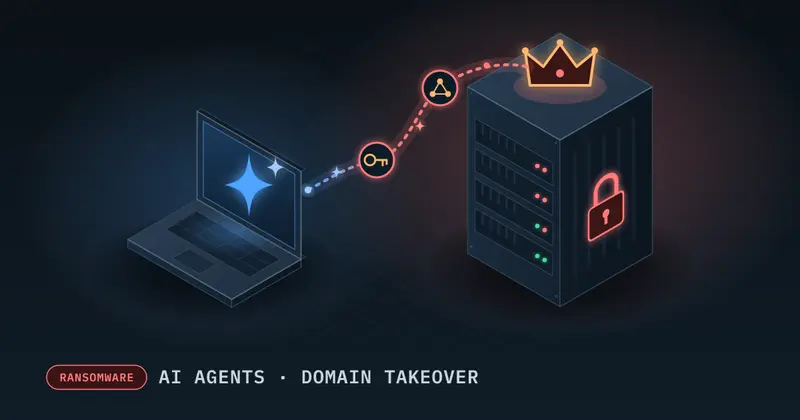
Sophos's Counter Threat Unit (CTU) has published research showing that GOLD OGRE, the cybercrime group behind Aur0ra (also written Aurora) ransomware, "extensively uses AI to conduct attacks". According to Sophos, the intrusions were run with Cursor, including its Composer agentic coding model, together with models from Anthropic, xAI and Moonshot. At first the operators used Anthropic models almost exclusively. They added other models later, possibly when their focus moved from building tools to carrying out intrusions.
How it worked: people supplied VPN credentials, SOCKS access, targets and goals, and the AI agents did most of the work. They mapped networks and Active Directory, searched file shares, backups and cloud-connected storage, and tried password spraying, Kerberoasting, NTLM coercion and relay, and pulling credentials out of files and backups. The tools named include Nmap or NetExec, BloodHound, PetitPotam, Impacket, Certipy and Cobalt Strike. Data was staged and copied to an S3 bucket. In some networks the agents went from credential access to domain administrator. Three of those victims later appeared on Aur0ra's leak site. Sophos does not give a total number of victims.
Getting past guardrails: Sophos says the attackers avoided the AI safety controls by describing the intrusions as authorized red team activity or "diagnostics testing".
How it was found: in May 2026 the CTU reported an AI-assisted framework that tested several vendors' EDR products. The same infrastructure was later seen hosting Cobalt Strike for Aur0ra operations. In late August, Sophos recovered Cursor artifacts, including chat logs, shell history and Windows and Linux (ESXi-ready) builds of the ransomware. Gambit Security and CloudSEK described the same exposed directory. Russian-language prompts and keyboard-layout traces suggest the operators speak Russian. That is an assessment, not a formal attribution. Sophos says it is "highly likely" that other ransomware groups will build AI agents into their operations too.